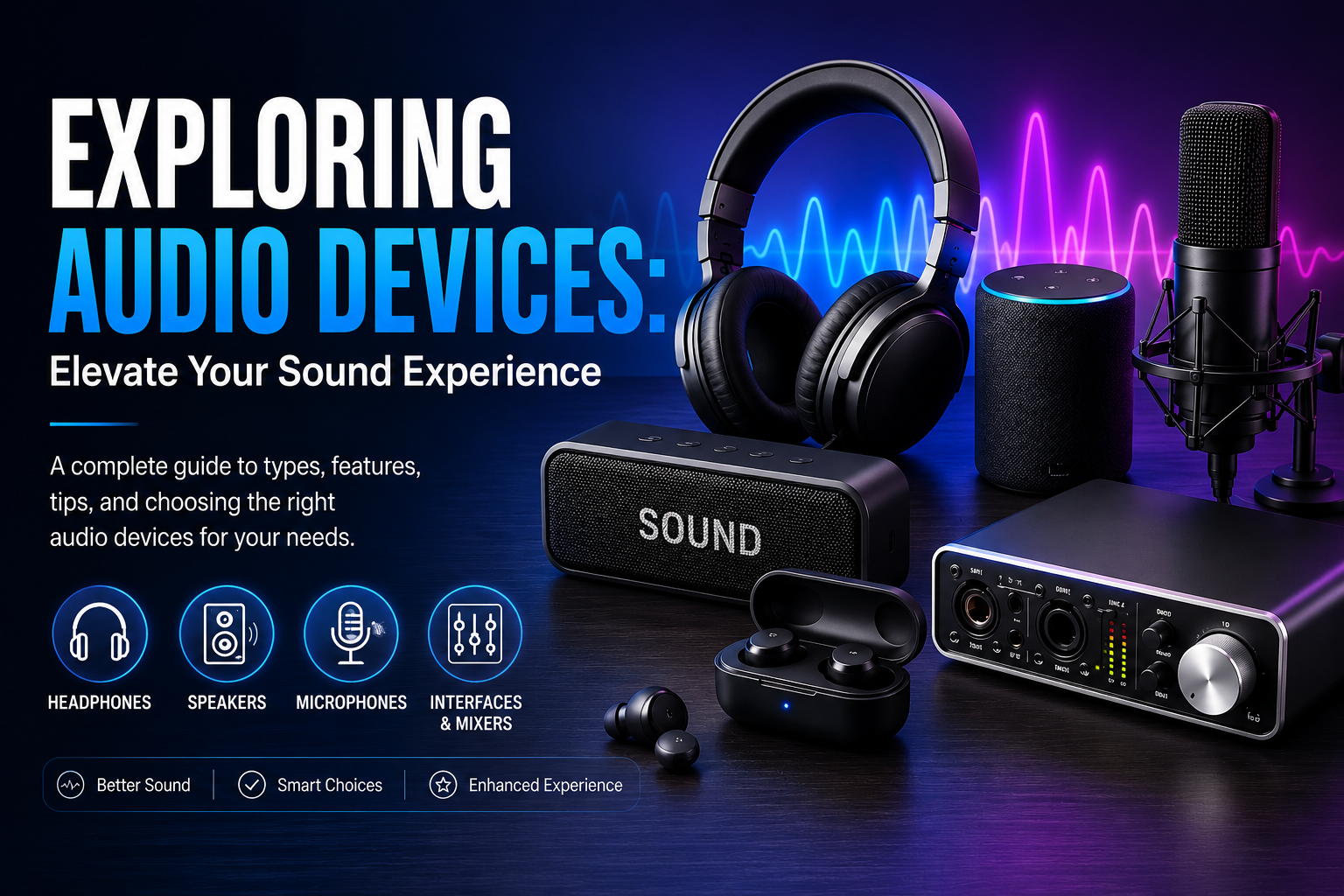

Audio devices have become an essential part of our daily lives, transforming how we enjoy music, communicate, and experience entertainment. Whether you’re a casual listener, a professional musician, or a tech enthusiast, understanding the various types of audio devices can enhance your sound experience significantly.
In this blog, we’ll explore the different audio devices available, their key features, how to choose the right ones for your needs, and tips to maximize your listening pleasure.
Audio devices encompass a broad range of equipment designed to capture, process, or reproduce sound. From headphones and speakers to microphones and sound systems, these devices play a critical role in delivering clear, immersive audio.
The rapid advancement in technology has led to innovations such as wireless connectivity, noise cancellation, and smart integration, making audio devices more versatile and user-friendly than ever.
Headphones are personal audio devices that cover or fit into your ears, allowing you to listen privately without disturbing others. They come in various styles:
These have large ear cups that surround the ears, providing excellent sound isolation and comfort. They are favored by audiophiles and professionals for their rich sound quality.
Smaller than over-ear models, these rest directly on the ears and are more portable, making them suitable for casual listening.
Compact and lightweight, earbuds fit inside the ear canal. They are perfect for on-the-go use, workouts, and everyday listening.
Modern headphones often include features such as Active Noise Cancellation (ANC), Bluetooth connectivity, and built-in microphones for calls and voice commands.
Speakers convert electrical signals into sound and are designed to fill a room or outdoor space with audio. They vary widely in size and purpose:
Compact and wireless, these speakers are ideal for outdoor activities, travel, or moving around the house.
Designed to create immersive sound experiences with multiple speakers, subwoofers, and receivers for cinematic audio performance.
Integrated with voice assistants like Alexa or Google Assistant, smart speakers allow voice control of music, smart home devices, and information.
High-quality speakers deliver clear, balanced sound with powerful bass and crisp highs, enhancing music, movies, and gaming.
Microphones capture sound for recording or amplification. They are vital for podcasts, live performances, streaming, and communication.
Durable and versatile, making them suitable for live performances and broadcasting.
More sensitive and precise, making them ideal for studio recordings and vocal performances.
Convenient plug-and-play devices that connect directly to computers, perfect for content creators, podcasters, and remote workers.
For professionals and enthusiasts involved in music production or live sound, audio interfaces and mixers are essential tools.
Audio interfaces connect microphones and instruments to computers, converting analog signals into digital audio. Mixers allow users to combine and adjust multiple audio sources for a balanced and professional output.
When choosing audio devices, several features influence performance and user experience:
Selecting the best audio device depends on how and where you plan to use it:
Over-ear headphones or high-quality speakers with rich, detailed sound profiles are ideal choices.
Noise-canceling wireless headphones or compact earbuds provide portability and excellent sound isolation.
Gaming headsets with surround sound capabilities and clear microphones enhance immersion and communication.
Studio-grade microphones and audio interfaces ensure professional-quality audio recording.
Affordable wireless earbuds or portable Bluetooth speakers offer convenience and reliable sound quality for everyday use.
Listening to high-resolution audio files or streaming through premium services can significantly improve sound clarity.
Headphones and earphones should fit securely, while speakers should be positioned correctly for optimal sound distribution.
Keep devices clean and store them properly to prolong their lifespan and maintain performance.
Adjust equalizer settings to match your listening preferences and enhance your favorite genres.
Manufacturers frequently release updates that improve performance, stability, and feature availability.
The audio industry continues to innovate rapidly. Advances in wireless technology, AI-powered noise cancellation, and spatial audio are creating even more immersive listening experiences.
Integration with smart home ecosystems, wearable devices, and voice-controlled technology is expanding the ways people interact with sound in everyday life.
Audio devices are more than just gadgets—they are gateways to a richer and more engaging world of sound. Whether you’re seeking the perfect headphones for your commute, powerful speakers for home entertainment, or professional microphones for creative projects, understanding today’s audio technology can help you make informed decisions.
Explore the latest audio devices and elevate your listening experience to new heights. Your perfect sound companion may be just a click away.
